
Sell Diamonds for Cash in New Jersey - Cash 4 Gold
Loose diamonds, engagement rings, and diamond jewelry purchased for same-day cash at 6 Central New Jersey locations with trained diamond evaluators on staff.
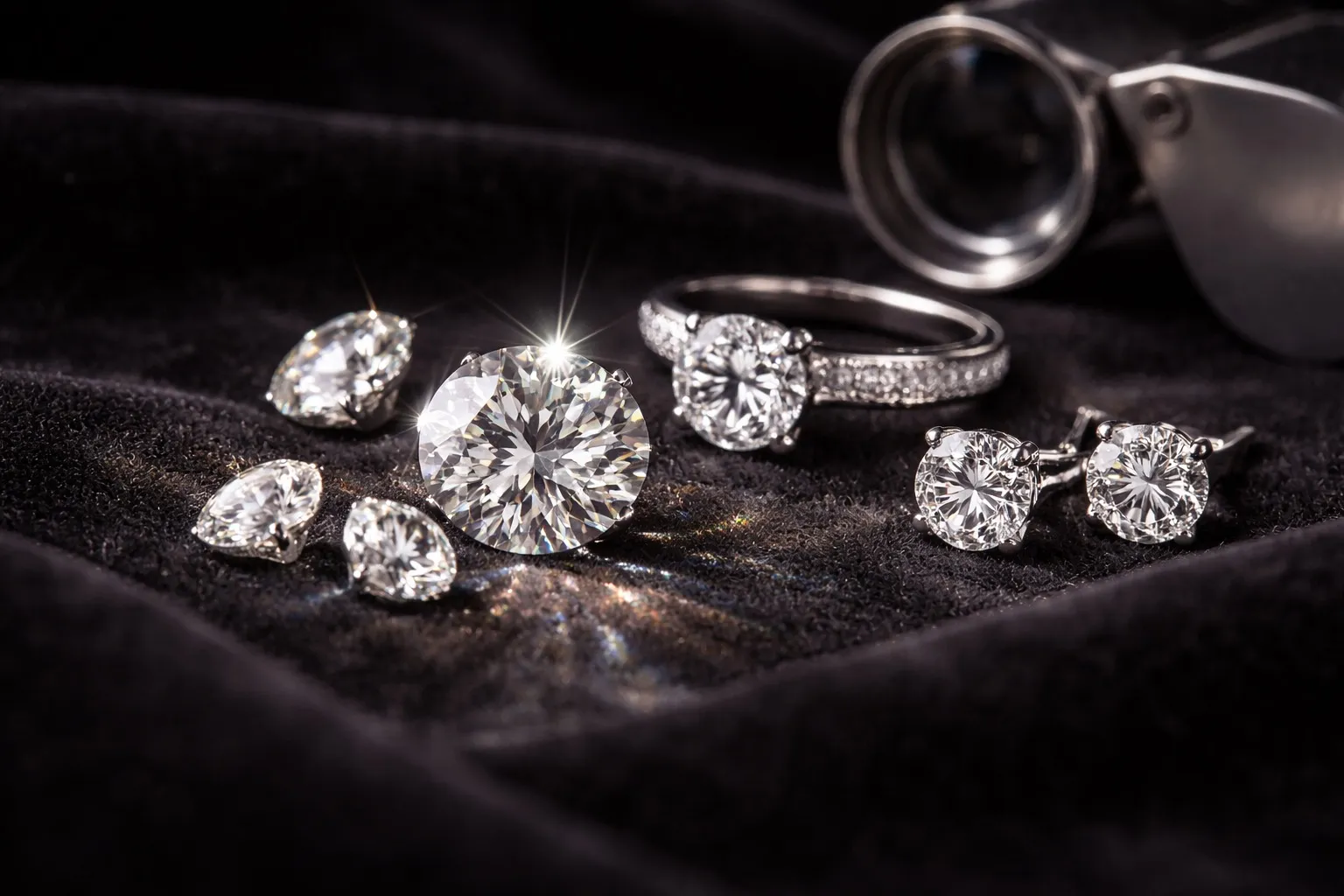
Why Sell Diamonds to Us?
Expert Evaluation
Our gemologists evaluate the 4 C's (Cut, Color, Clarity, Carat) to give you an accurate, fair price.
We Buy The Setting Too
Selling an engagement ring? We pay for both the diamond AND the gold or platinum setting.
No Pressure, No Obligation
Get a free evaluation. If you don't like our offer, walk away with no hard feelings.
Confidential Service
Selling an engagement ring after a breakup? We handle everything with discretion and respect.
Diamond Buying in Central New Jersey
Selling a diamond is fundamentally different from selling gold or silver. With precious metals, value comes down to weight and purity. Diamonds are the opposite. Two stones that look identical to the naked eye can differ in value by thousands of dollars based on gemological grading factors that require trained evaluation and professional equipment to assess.
That's why we keep dedicated evaluators on staff rather than relying on generic precious metals testing alone.
The diamond resale market operates at roughly 30% to 60% of what you originally paid at retail. That gap surprises people, but it reflects how retail jewelry pricing works. The sticker price at a jewelry store covers not just the stone, but also the retailer's rent, staff, insurance, marketing, display cases, and profit margin. None of those costs transfer when you resell.
What you're selling into is the wholesale market, where dealers price stones based on current trading values for that specific combination of size, cut, color, and clarity. Prices are published in industry guides like the Rapaport Diamond Report, so there's limited room for any buyer to underpay or overpay.
If you have a GIA or AGS grading report, an original purchase receipt, or an insurance appraisal, bring them. Each document gives our evaluators more data to work with, which translates directly into a stronger offer. Without documentation, we perform a full in-house assessment. It just introduces slightly more uncertainty, which gets factored into the price. Walk-ins are welcome Monday through Friday 10 AM to 6 PM and Saturday 10 AM to 5 PM.
Understanding Diamond Value
The 4 C's Explained
Diamond value is determined by four factors:
- Carat:: Weight of the diamond. Larger stones are exponentially more valuable
- Cut:: How well the stone is shaped. Affects sparkle and brilliance
- Color:: D (colorless) to Z (yellow). Colorless grades are most valuable
- Clarity:: Inclusions and blemishes. Flawless is rare and commands the highest prices
What Affects Your Payout: Wholesale Value by Size and Quality
Diamond wholesale values vary dramatically based on size and quality tier. The table below shows approximate resale ranges for round brilliant diamonds in 2026 to give you a realistic expectation before you visit:
| Carat Weight | Lower Quality I-J Color / SI1-SI2 Clarity |
Mid Quality G-H Color / VS1-VS2 Clarity |
Higher Quality D-F Color / VVS-IF Clarity |
|---|---|---|---|
| 0.25 ct | $50 – $120 | $100 – $250 | $200 – $450 |
| 0.50 ct | $250 – $500 | $500 – $1,000 | $1,000 – $2,200 |
| 1.00 ct | $1,200 – $2,500 | $2,500 – $4,500 | $4,500 – $9,000 |
| 1.50 ct | $2,500 – $5,000 | $5,000 – $9,000 | $9,000 – $18,000 |
| 2.00 ct | $5,000 – $10,000 | $10,000 – $20,000 | $20,000 – $40,000 |
Note: These are approximate wholesale ranges for natural round brilliant diamonds with good to excellent cut grades. Fancy shapes (princess, oval, cushion) typically trade 10-25% below round brilliants of equivalent quality. Lab-grown diamonds trade significantly lower. Actual offers depend on the specific stone's characteristics and current market conditions. If your diamond is mounted in a gold or platinum setting, you receive additional payment for the metal value.
Bring Documentation If You Have It
Not all paperwork is equal. Here's what helps and why each document matters:
- GIA or AGS Grading Report: This is the most valuable document you can bring. It eliminates grading uncertainty entirely. We know the exact cut, color, clarity, and carat weight without relying on an in-house estimate. That certainty translates directly into a higher offer because there's no risk discount built in.
- Original Purchase Receipt: Tells us the retail context: where the stone was bought, when, and at what price. This helps us verify the stone's history and gives us a reference point for the original quality tier the jeweler sold it as.
- Insurance Appraisal: Insurance appraisals state the replacement value, which is typically higher than retail. While we don't pay replacement value (no resale buyer does), the appraisal confirms the stone's characteristics and gives us another data point for the evaluation.
- No Documents at All:: Still fine. We evaluate uncertified diamonds daily using professional gemological tools: loupe, microscope, and master comparison stones. The assessment is thorough; it just carries slightly more uncertainty, which gets reflected in the pricing.
What We Buy
- ✓ Loose diamonds (any size, any shape)
- ✓ Engagement rings
- ✓ Diamond earrings and pendants
- ✓ Diamond bracelets and tennis bracelets
- ✓ Estate and antique diamond jewelry
- ✓ Certified and uncertified diamonds
What Actually Determines Your Diamond's Value
Diamonds are more complex to price than gold or silver. Here's what drives your payout:
Carat Weight
The single biggest price driver. A 1-carat diamond doesn't just cost twice as much as a 0.5-carat. It costs four to six times as much. Diamond value scales exponentially with carat weight, not linearly. Anything above 0.5ct starts to get interesting. Above 1ct, we look closely at the other factors.
Cut Quality
Cut determines how much the diamond sparkles. An Excellent or Ideal cut stone with great light return commands a premium. A poorly cut diamond of the same carat weight can be worth 30-50% less. This is the one C that's fully controlled by humans, not nature.
Color and Clarity
Color runs D (colorless) to Z (noticeably yellow). Clarity runs from Flawless to I3 (heavily included). For resale value, D-F color and VS2 and above clarity matter most. Stones with visible inclusions or strong color still sell; they just command lower prices.
Certification and Mounting
A GIA or AGS certificate adds real value because it verifies quality and removes doubt, which means we can pay more with confidence. If your diamond is in a gold or platinum setting, we pay separately for the metal at live LBMA spot rates. A 14K white gold engagement ring setting adds its own metal value on top of the diamond price.
Honest expectation: Diamonds resell at wholesale, typically 30% to 60% of the original retail price. That reflects the diamond market, not the buyer. We offer competitive wholesale prices based on current market conditions. The retail markup covered the jeweler's overhead, the setting, the packaging, and the marketing.
Situations We See Every Week
Here's what the process actually looks like for common scenarios:
The Engagement Ring That Didn't Lead to a Wedding
This is personal, and we treat it that way. When you walk in, there's no paperwork to fill out first and no waiting room full of other customers watching. You sit down one-on-one with an evaluator at a private counter. The whole process, from handing over the ring to receiving a cash offer, takes about 15 to 20 minutes.
Here's what happens in that time: the evaluator examines the diamond under magnification, checks for any certification laser inscription on the girdle, assesses the 4Cs, and weighs the metal setting separately. You'll get a breakdown showing the diamond value and the metal value as separate line items.
Accept and you walk out with cash. Decline and you walk out with your ring. Nobody's going to pressure you or ask why you're selling. We've handled enough engagement rings to know that the last thing anyone wants is small talk about it.
Estate Jewelry from a Family Member's Collection
Antique diamonds require a different evaluation approach than modern stones. Diamonds cut before roughly 1950 (old mine cuts, old European cuts, rose cuts) follow different proportions than today's round brilliant standard. They were cut for candlelight, not LED spotlights.
An old European cut might score poorly on a modern GIA cut grade scale, but that doesn't mean it lacks value. These cuts have a dedicated collector market where buyers specifically seek the warmer light performance and historical character of antique stones.
When we evaluate estate diamond jewelry, the first question is whether the piece has more value intact or as separate components. A well-preserved Art Deco platinum ring with filigree work may be worth more as a complete piece to a vintage jewelry buyer than the diamond and platinum would be individually. A damaged Victorian brooch with a nice center stone might be worth more parted out.
We assess both paths and give you an honest comparison so you can decide. For larger estate collections, we offer free house calls. Call (732) 444-2022 to arrange one.
Upgrading Your Stone and Selling the Old One
The practical question with upgrades is always: how much of the new ring can the old one fund? Here's a realistic example. Say you bought a 0.75ct, H-color, SI1 engagement ring five years ago for $3,500 retail. At current wholesale, that stone might bring $800 to $1,200, plus another $150 to $300 for the 14K gold setting depending on weight. So you're looking at roughly $1,000 to $1,500 toward your upgrade, somewhere around 30-40% of the original retail price.
That math improves with larger, higher-quality stones. A 1.5ct, G-color, VS2 stone that retailed for $12,000 might bring $5,000 to $7,000 at wholesale, closer to 45-55% recovery. The key factors: bigger stones hold a higher percentage of their value, certified stones do better than uncertified ones, and round brilliants recover more than fancy shapes. If you're planning an upgrade, come in with the old ring first, get a firm number, and then shop for the new stone knowing exactly what you have to work with. No commitment required. You can take the cash or take the ring home.
Diamond Questions, Answered Honestly
Things people want to know before they walk in:
Do you buy lab-grown diamonds?
Yes, but the resale market for lab-grown diamonds is significantly weaker than for natural diamonds. Lab-grown stone prices have dropped dramatically over the past few years as production has scaled up, which affects resale values. We can evaluate lab-grown stones, but expect the offer to reflect current market conditions, which are not favorable compared to what was paid retail. If you have documentation confirming it's lab-grown (or natural), bring it.
Does my diamond need a GIA certificate to sell?
We buy uncertified diamonds all the time. But a GIA or AGS certificate does help, because it tells us exactly what we're buying. When we know the precise cut, color, and clarity grades, we can make a stronger offer. Without a certificate, we evaluate the stone in-house, which is accurate but introduces a bit more uncertainty on both sides. If you have the original paperwork, dig it out before you come in.
Is a loose diamond worth more than one that's in a setting?
Not necessarily. The diamond value is the same either way. When a diamond is mounted, we pay for the stone and the metal setting separately. The setting (gold or platinum) has its own melt value. Sometimes people think removing the stone first will get them more money, but it's not necessary. We handle it all in one transaction and you get paid for both components.
What quality factors matter most when selling a diamond?
Carat weight and cut are the two biggest levers. Color and clarity matter more as the stone gets larger. On a 0.3ct stone, the difference between H and D color barely moves the needle. On a 1.5ct stone, that same grade difference could mean hundreds of dollars. If you have a larger stone (1ct+), the full 4 Cs will all factor into the offer significantly.
Do you buy estate and antique diamond jewelry?
Yes. Art Deco, Victorian, Edwardian. We see estate pieces regularly. Older pieces often feature old European, old mine, or rose cut diamonds, which have a dedicated collector market. We'll assess whether the piece has more value intact as a collectible versus the component metal and stone values. Either way, we'll give you an honest breakdown so you can make the best decision.
How do I get the most money when selling a diamond?
Three things: bring documentation (GIA cert if you have it), bring the original receipt or appraisal if available, and compare offers. We encourage you to get quotes from multiple buyers. It keeps everyone honest. Our offer is based on current wholesale market rates for diamonds of your stone's characteristics. We don't low-ball hoping you won't shop around. If someone else is genuinely paying more, take it.
How We Evaluate Your Diamond: The Process
Diamond evaluation is more involved than weighing gold on a scale. Here's exactly what happens when you bring a diamond to any of our locations:
Initial Inspection and Identification
The evaluator examines the stone with the naked eye and a 10x loupe to confirm it's a natural diamond (not moissanite, cubic zirconia, or lab-grown unless disclosed). We check for any laser inscription on the girdle. GIA-certified stones have their report number inscribed microscopically, which lets us pull up the exact grading report. If the stone is mounted, we assess whether it can be evaluated in-setting or needs context from the mounting style to estimate carat weight.
Magnified Examination Under Microscope
The stone goes under a gemological microscope at 30-60x magnification. This is where clarity grading happens. The evaluator maps inclusions (internal flaws like crystals, feathers, or clouds) and blemishes (surface marks like scratches or chips). The type, size, position, and number of inclusions determine the clarity grade, from Flawless down to I3. Inclusions near the center of the table facet affect value more than those hidden near the girdle edge.
Color and Cut Assessment
Color grading is done face-down against a white background using master comparison stones, a set of pre-graded diamonds that serve as reference points for each color grade from D through Z. The evaluator compares body color under controlled lighting to determine where on the scale the stone falls. Cut quality is assessed by examining proportions (table percentage, crown angle, pavilion depth) and light performance: how well the diamond returns light as brilliance, fire, and scintillation.
Certification Cross-Check
If you brought a GIA or AGS report, the evaluator verifies it matches the stone by checking carat weight, the plotted inclusion diagram against what's visible under magnification, and confirming the laser inscription matches the report number. If the certification checks out, we use those verified grades for pricing. If there's no certificate, the in-house assessment from steps 2 and 3 establishes approximate grades. Verified certification typically results in a stronger offer because it eliminates grading uncertainty from both sides of the transaction.
Market Pricing and Cash Offer
With the 4Cs established, the evaluator prices the stone against current wholesale market values. The diamond wholesale market is anchored by the Rapaport Diamond Report, an industry pricing sheet updated weekly that lists per-carat wholesale prices for every combination of shape, size, color, and clarity. Our offer is based on where your specific stone falls on that grid, adjusted for cut quality, fluorescence, and current market demand. If the diamond is in a setting, the metal component is weighed and valued separately at current spot rates. You get a combined offer with a clear breakdown of diamond value plus metal value, and you decide on the spot whether to accept. The entire process from start to cash takes 15 to 20 minutes.
Sell Diamonds at Any of Our 6 New Jersey Locations
Walk in for a free diamond evaluation. Our experts assess the 4 C's on-site at every location.
Every location has trained diamond evaluators on staff. Free appraisals with no obligation, instant cash if you accept. Serving East Brunswick, Middlesex, Millstone, New Brunswick, Brick, Manalapan, and all of Central New Jersey.
💰 Get Your Free Diamond Appraisal
Free appraisal, no obligation. We respond within minutes.